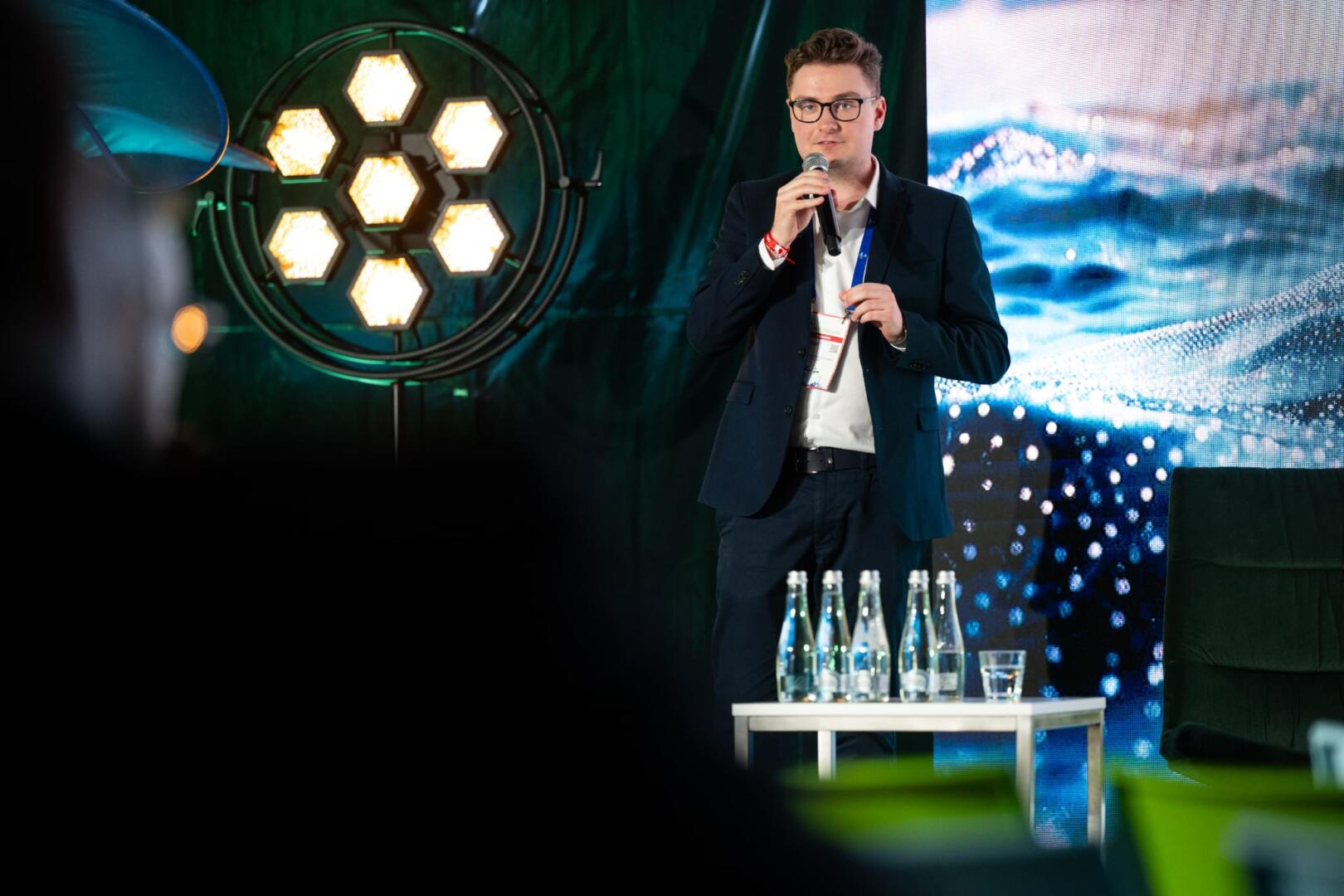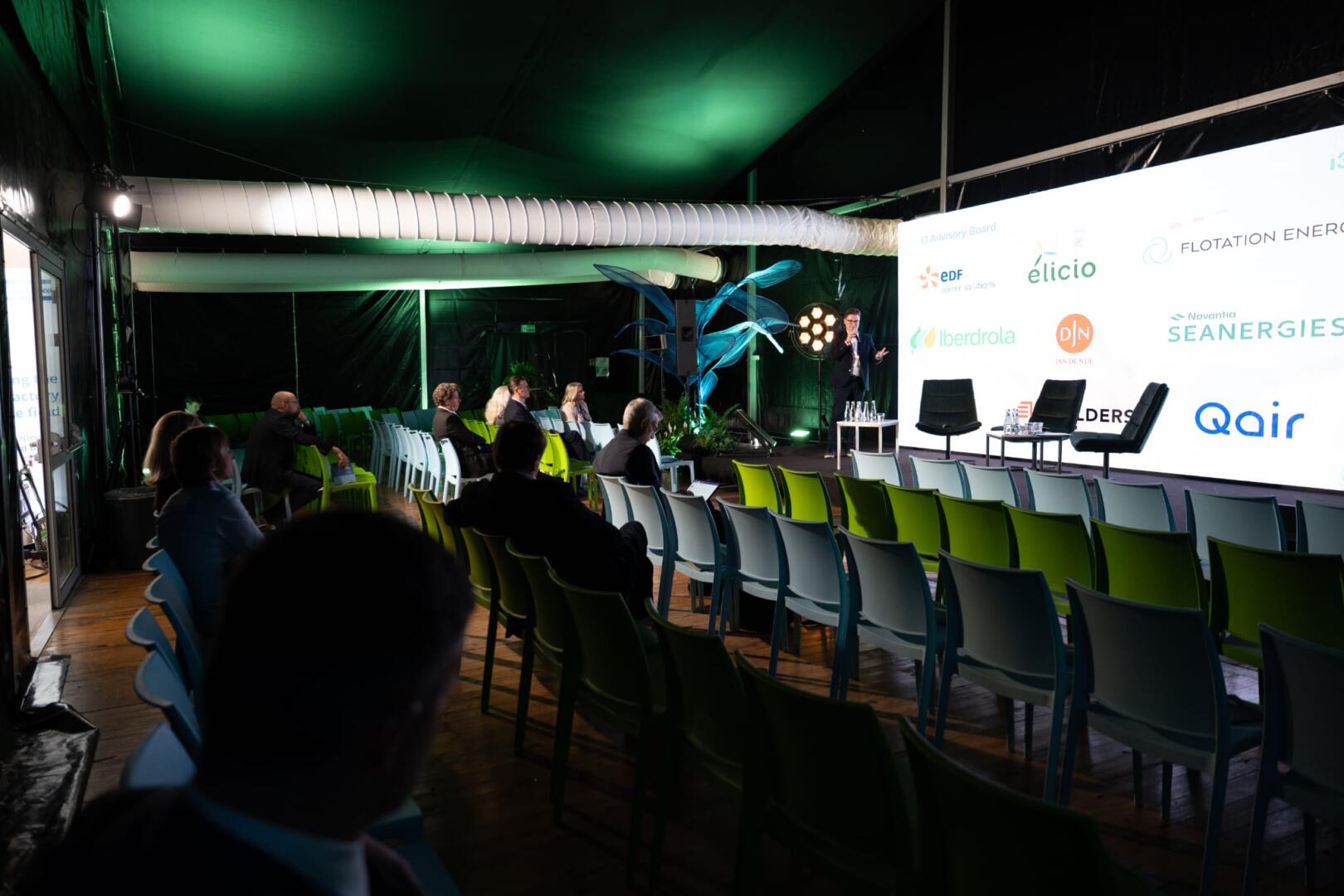

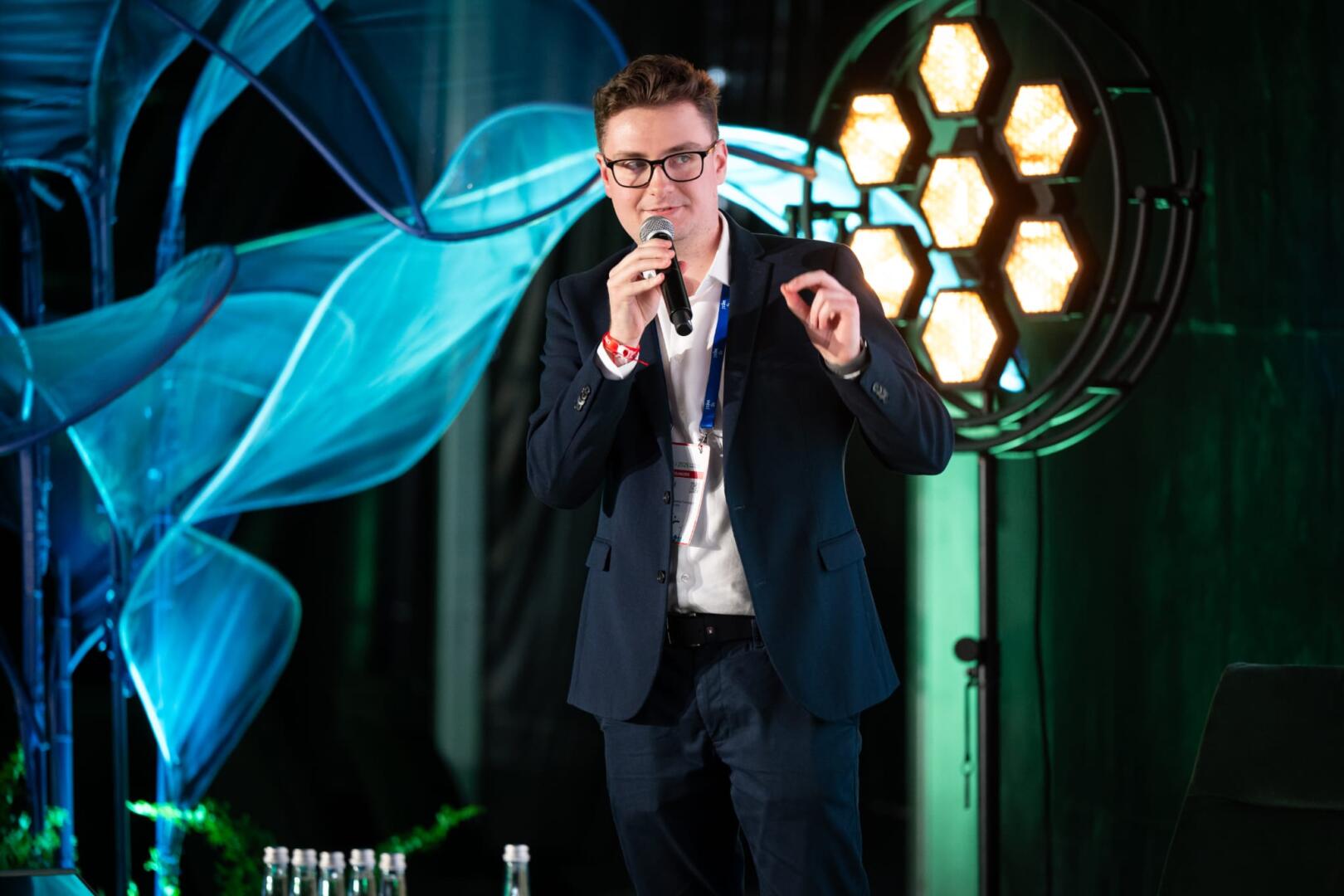
On June 9 during the largest Polish wind energy event – PSEW2026 Conference – the second regional workshop for West Pomerania of the I3FLOAT project took place. During the workshop, Michał Forycki from Wind Industry Hub (WIH) presented information on this rapidly developing technology – it is projected that by the end of the decade, a total of 10 GW of floating wind turbine capacity will be installed worldwide. International Renewable Energy Agency (IRENA) estimates that by 2050, these installations will account for 15% of all offshore wind farms, reaching a capacity of 264 GW. Prototype projects have already been launched in Norway, the United Kingdom, Portugal, France, and China.
The supply chain, which is being shaped almost from scratch, currently presents a unique opportunity for local companies to get involved in the development of this technology at an early stage. The European Union co-funded I3FLOAT Project is designed to help with this; its goal is to strengthen the value chain for floating offshore wind farms by mobilizing interregional investments in innovation and accelerating the market readiness of advanced technologies. A key element of the initiative is the awarding of grants of up to 60,000 euros to 50 SMEs. As part of its work, the consortium is currently finalizing the funding criteria for Open Calls. A significant portion of the funds will be allocated exclusively to SMEs from so-called “less developed regions” in the European Union – which includes most provinces in Poland – so we hope that local companies will benefit from the project to the greatest extent possible.
Funding will be allocated based on key sectors of the value chain covering the entire project lifecycle. These will be defined in the Floating Wind Strategic Innovation Agenda, which identifies priority areas of innovation requiring support. We are currently launching Phase 2 of the participatory process, focused on setting priorities for innovation directions. The goal is to identify those innovation directions that are of the greatest strategic importance for the future development and industrial implementation of floating offshore wind energy. In Phase 2, participants are asked to evaluate innovation directions based on two criteria:
👉 Technical and industrial feasibility
👉 Potential impact on cost reduction
The consultation is conducted via a simple online form. Check details here.