

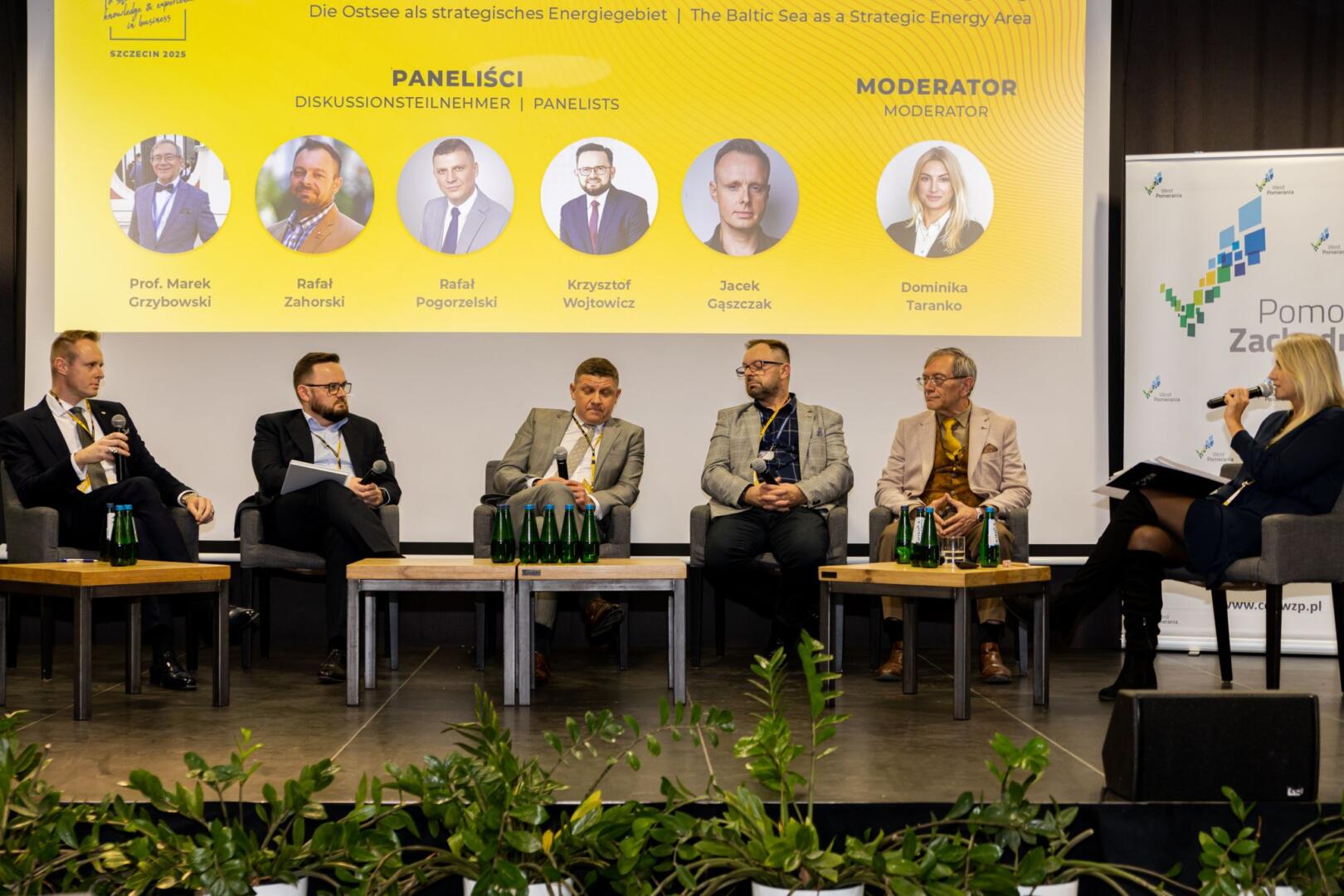
On Thursday, Szczecin hosted the 8th edition of the CSL conference: TSKAE 2025 – Baltic Energy: Transformation, Security, and Industry of the Future. The conference is organized at the headquarters of the organizer – CSL Sp. z o.o., i.e. in Stara Rzeźnia in Szczecin, in cooperation with the Marshal’s Office of the West Pomeranian Province and the German law firm MNB Legal Rechtsanwaltsgesellschaft mbH. CSL supports innovation and all pro-development initiatives, and each year the conference addresses important business issues in the West Pomeranian Region ⚡🌊
This year’s discussion was divided into four thematic blocks. Two of them were moderated by Dominika Taranko, Vice President and Managing Director of Wind Industry Hub (WIH), and her interlocutors were:
🛡️ Panel III: Energy infrastructure security
Topic: “Resilience of energy systems in times of crisis”
🔹 Sebastian Kalitowski – CEO, Maritime Safety & Security Ltd.
🔹 Rafal Malujda – Rafal Malujda Law & Patent Office
🔹 Adam Kampa – President of the Management Board, Szczecińska Energetyka Cieplna
🔹 Marcin Szulga – Director of the Qualified Trust Services Development Department, Asseco Data Systems
🔹 Joanna Ryngwelska – Program Manager for Critical Infrastructure Protection, Advanced Protection Systems Inc.
⚓ Panel IV: The Baltic Sea as a strategic energy areaTopic: “Poland’s Exclusive Economic Zone in the Baltic Sea”
🔹 Prof. Marek Grzybowski – President, Baltic Sea & Space Cluster
🔹 Rafal Zahorski – Port Development Representative, Szczecin and Świnoujście Seaports Authority
🔹 Rafał Pogorzelski – Managing Partner, ATNEO Advisory Group
🔹 Krzysztof Wojtowicz – Associate Partner, Deloitte
🔹 Jacek Gąszczak – Head of the Customs Agency Branch, CSL Sp. z o.o.
💡 Among the selected conclusions, we can highlight the need for a more proactive rather than reactive response to incidents in the Baltic Sea, so that we can “observe the enemy and take action against them” rather than waiting for a blow, after which we only take on the role of paramedics and commentators on events. The panelists also pointed out the need to follow company procedures (rather than just keeping them “in the closet”) and to use the support of advisors in times of a rapidly changing regulatory and business environment. This may apply in particular to compliance with cybersecurity requirements, but also to tax issues related to CIT, VAT, and customs duties in offshore wind projects. These issues are not fully defined by law and often generate interpretation problems.
🎯 The interviewees clearly stated that the times we live in are characterized by a high intensity and frequency of various types of threats, and for this reason, better communication, coordination, and preparation for extreme events are crucial.
Photo: Mariusz Graca